

Equities Stage Historic Rally Following Ceasefire
Key Takeaways
- Middle East ceasefire announced.
- Oil falls from highs.
- Domestic equities hit new highs.
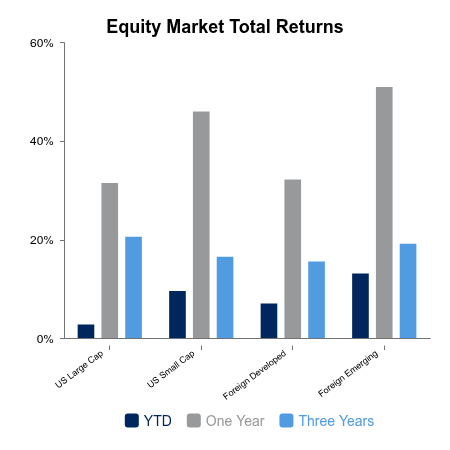
The S&P 500 just completed its fastest rally to new all-time highs following a decline of 5-10%. The market fell about 9% over 43 trading days and then reclaimed the highs in just 11 days. Markets looked favorably upon ceasefire headlines out of the Middle East. A two-week ceasefire agreement between the U.S., Israel, and Iran was announced on April 7. Markets jumped on the news and haven’t looked back despite the Strait of Hormuz still being largely shut.
Despite the S&P 500 hitting new highs on Tuesday, only 18 stocks in the index hit a 52-week high. The follow-through day on Wednesday saw just 12 hit a new high. The U.S. is the first major market to reclaim the highs, which by classic principles would suggest a higher probability of forward outperformance. Emerging markets, foreign developed indices, Korea, and Japan have yet to reclaim their highs.
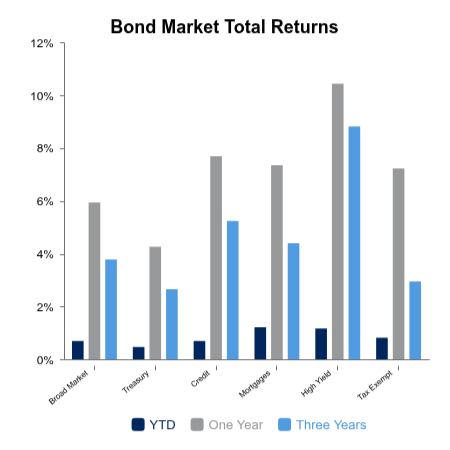
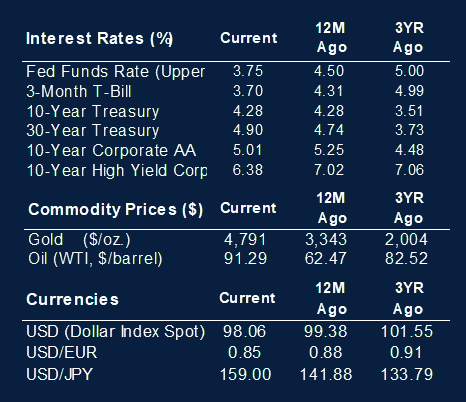
Oil futures prices have moved off their highs, although there is a big gap to actual prices for physical oil. Actual seaborne oil trades about $40 higher. There is a lot of public commentary on intervention, although it has been denied by the administration. Shipping costs and insurance have moved up significantly and could be the reason why there is a large gap. Bond yields have moved lower following the ceasefire with the 10-year Treasury yield about 15 basis points lower.
Markets Welcome Favorable Inflation Readings as Consumer Sentiment Weakens
CPI was up 0.9% for the month of March, which was in-line with consensus expectations. Core CPI ticked down to 0.2% and came in lower than expected. Producer prices came in well below consensus expectations. The Federal Reserve’s preferred inflation measure is Core PCE, which came in at +0.4% versus the previous month. Core PCE is less influenced by muted housing inflation and has a higher allocation to persistent health care inflation. Despite core PCE remaining elevated, the market is more focused on CPI and PPI. Decent monthly readings helped sustain the equity momentum.
The University of Michigan Consumer Sentiment hit an all-time low of 47.6. Much of the weakness was attributed to consumers’ views of their real income. Negative expectations related to the Iran conflict also played a role.
 |
 |
Sources: BTC Capital Management, Bloomberg
The information provided has been obtained from sources deemed reliable, but BTC Capital Management and its affiliates cannot guarantee accuracy. Past performance is not a guarantee of future returns. Performance over periods exceeding 12 months has been annualized.
This content is provided for informational purposes only and is not intended as an offer or solicitation with respect to the purchase or sale of any security. Statements in this report are based on the views of BTC Capital Management and on information available at the time this report was prepared. Rates are subject to change based on market and/or other conditions without notice. This commentary contains no investment recommendations and should not be interpreted as investment, tax, legal, and/or financial planning advice. All investments involve risk, including the possible loss of principal. Investments are not FDIC insured and may lose value.