

Key Takeaways
- Oil prices tumble in hopes of ramping up gulf states oil shipments.
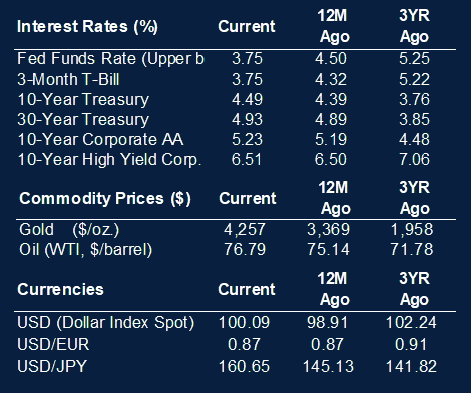
- Fed holds rates steady as new Fed chair pledges focus on price stability.
- Insight Extra covers this week’s IPO.
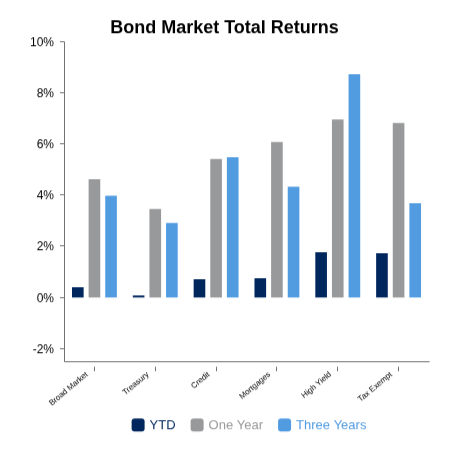
This week the Federal Open Market Committee voted unanimously to keep the policy rate at 3.50%-3.75%. This policy decision marked the debut of the newly confirmed Federal Reserve Chair Kevin Warsh, who signaled a shift in the central bank’s operational approach and an emphasis on price stability. The Kevin Warsh era as the new Federal Reserve Chair was clearly noted in a shortened post-meeting policy statement that removed the committee’s forward guidance summary and announced five new task forces to recommend changes at the over century old institution. The remaining members of the committee signaled an aggressive stance on inflation. Half of the reporting officials now project at least one interest rate hike by year-end, while the other half favor keeping rates unchanged. This contrasts with the Committee’s last meeting in March where the average outlook of members was a 25-basis point cut this year. Bonds were down 0.2% for the week.
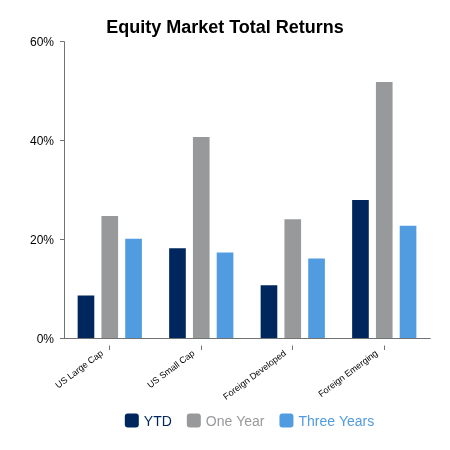
US Equity markets notched a small gain this week with the MSCI USA Index ticking up 0.4%. However, it is still down 2.0% for the month overall. While SpaceX’s strong launch normally would have given the broader market a nice boost, its gains were not included in major market benchmarks because stock indexes have strict waiting periods and eligibility rules before they add newly listed companies. For a deeper look into initial public offerings (IPOs), check out last week’s Insight Extra feature.
International stock markets rebounded sharply this week, with the MSCI ACWI ex US Index surging 7.2%. This rally completely erased losses earlier in the month, pushing overseas equities into positive territory with a 2.1% gain for the month. Momentum accelerated throughout the week as news of a preliminary agreement regarding the Middle East conflict provided a pathway for increased Gulf State oil shipments to European and Asian markets.
According to the University of Michigan, consumer sentiment regarding current economic conditions improved in May, with the index rising to 48.9 from its previous reading of 44.8. However, despite this short-term one-month bounce driven by lower gasoline prices, the index remains near a 50-year historic low, underscoring consumers’ concerns about the direction of inflation and wages.
U.S. retail sales expanded by 0.9% in May, marking the fourth consecutive monthly increase as consumers ramped up spending across a broad range of retail sectors. Retailers reported that demand remains resilient in the face of higher prices, with consumers increasingly prioritizing value to optimize their purchasing power.
 |
 |
Sources: BTC Capital Management, FactSet Research Systems Inc., Federal Open Market Committee (Federal Reserve) LSEG I/B/E/S, FTSE Russell (an LSEG Group company), S&P Global, U.S. Bureau of Labor Statistics, U.S. Census Bureau
The information provided has been obtained from sources deemed reliable, but BTC Capital Management and its affiliates cannot guarantee accuracy. Past performance is not a guarantee of future returns. Performance over periods exceeding 12 months has been annualized.
This content is provided for informational purposes only and is not intended as an offer or solicitation with respect to the purchase or sale of any security. Statements in this report are based on the views of BTC Capital Management and on information available at the time this report was prepared. Rates are subject to change based on market and/or other conditions without notice. This commentary contains no investment recommendations and should not be interpreted as investment, tax, legal, and/or financial planning advice. All investments involve risk, including the possible loss of principal. Investments are not FDIC insured and may lose value.