

Economic Tug-of-War
Key Takeaways
- Positive fourth quarter earnings certainty versus geopolitical uncertainty.
- Better than expected ISM data.
- Rising inflation concerns lift interest rates.
This week markets have highlighted the tug-of-war between two opposing forces: heightening geopolitical uncertainty and underlying structural strengths fueled by strong earnings and economic data.
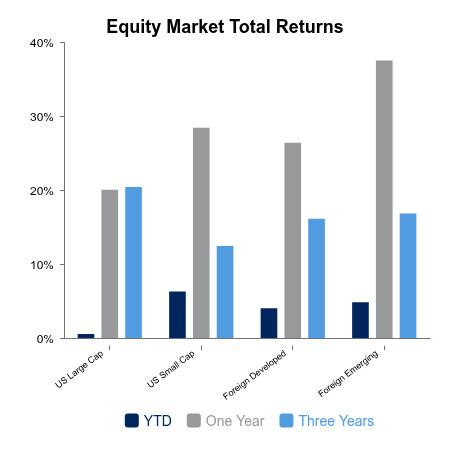
The S&P 500 Index, which had been under pressure since last Wednesday, hit a sentiment-driven sell-off on Monday’s open before staging a fragile rebound Wednesday. Overall, the index saw a modest -0.6% pullback for the last five trading days. Prices of shares in energy stocks climbed amid geopolitical tensions while the information technology sector faced declines as the market continued to rationalize valuations and underlying credit concerns.
As the corporate reporting season draws to a close, the strength of the underlying earnings environment has functioned as a buffer against a deeper market correction. Of the 479 S&P 500 companies that have reported, 66% beat revenue estimates and 74% exceeded net income expectations. This resilience is further underscored by a 9.6% growth in revenue and a 14.6% increase in earnings-per-share over the last 12 months.
Recent economic data mirrors the growth seen in last quarter’s earnings. Both the ISM Service and Manufacturing indexes advanced in February, signaling strong sentiment and activity. The headline Service PMI jumped to 56.1 from 53.8, a “goldilocks” result characterized by accelerating production, improved employment, and cooling price pressures. Private-sector payrolls increased to 63,000 in February, showing a labor market that is slowly finding its footing with hiring led by education and health services, the same two sectors that led employment last year. Meanwhile, the Fed’s latest Beige Book offered a more tempered view, noting that economic activity increased at a moderate pace across seven of the 12 districts.
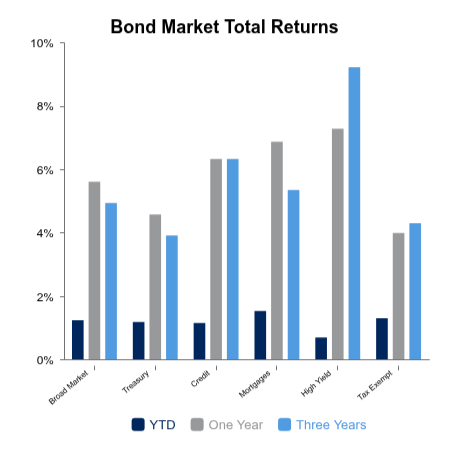
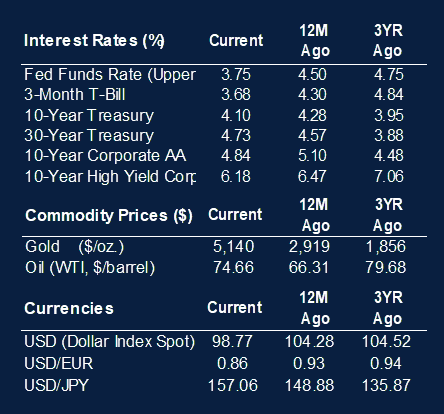
U.S. bond markets declined -0.4% as the 10-year Treasury yield climbed from 3.94% back to 4.10%. Initial spikes in oil prices pushed yields higher on fears of an inflation flare-up and a widening of the federal deficit; however, safe haven buying has slowed this rise of interest rates. These inflation concerns also shifted rate-cut expectations, with markets pushing the estimated timeline for the first Federal Reserve cut from June to July. Corporate spreads widened moderately as concerns about increased default risk in private credit markets spilled over to public markets.
While domestic equities remained relatively steady, Asian markets faced sharper declines. The MSCI ACWI ex-U.S. fell 5.9% as investors rotated out of technology stocks following a recent rally. However, as we write this, a rebound on Thursday is beginning overseas as China unveils a five-year economic plan centered on expanded consumer and government spending.
 |
 |
Sources: BTC Capital Management, FactSet Research Systems Inc., Federal Open Market Committee (Federal Reserve) LSEG I/B/E/S, FTSE Russell (an LSEG Group company), S&P Global, U.S. Bureau of Labor Statistics, U.S. Census Bureau
The information provided has been obtained from sources deemed reliable, but BTC Capital Management and its affiliates cannot guarantee accuracy. Past performance is not a guarantee of future returns. Performance over periods exceeding 12 months has been annualized.
This content is provided for informational purposes only and is not intended as an offer or solicitation with respect to the purchase or sale of any security. Statements in this report are based on the views of BTC Capital Management and on information available at the time this report was prepared. Rates are subject to change based on market and/or other conditions without notice. This commentary contains no investment recommendations and should not be interpreted as investment, tax, legal, and/or financial planning advice. All investments involve risk, including the possible loss of principal. Investments are not FDIC insured and may lose value.