
The Federal Reserve Increases Interest Rates
Key Takeaways
- Market breadth is weak.
- Warsh signals more hikes to come.
- Semiconductors stumble.
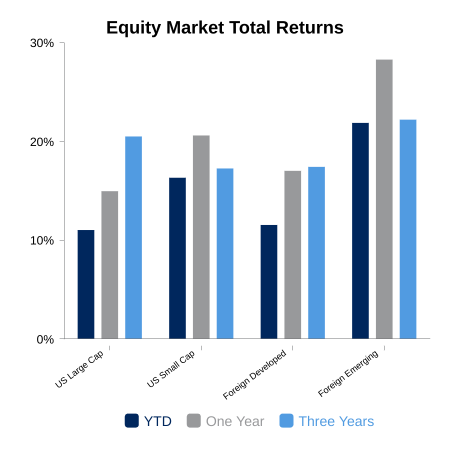
The S&P 500 was down 1% for the week but continued to hold up amid generally weak market conditions. The NASDAQ was down 1% as well and continued the sideways chop that has persisted for three months. Foreign equities underperformed, led by a 3.8% drop in emerging markets.
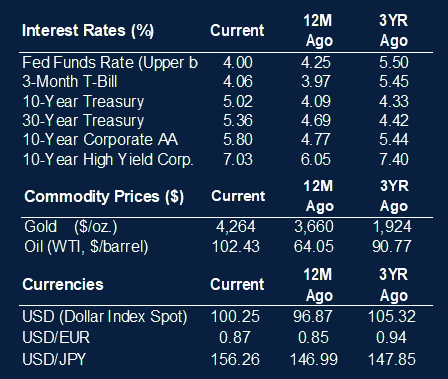
Energy remains a dominant theme as oil prices have pushed higher. Attacks on Middle East infrastructure prompted concerns regarding supply. Refined products remain the biggest focal point. U.S. diesel prices crossed $6 per gallon for the first time ever, with California prices approaching $8 per gallon. This continues to add pressure to the energy-driven inflation narrative.
Semiconductors started the week with a sharp selloff after AI developers suggested slowing the development of their most advanced models. Semiconductors led the market lower on Monday and remain in correction territory with a 20% decline from their peak in June. Of course, that peak in June was the result of a 100% surge in just three months.
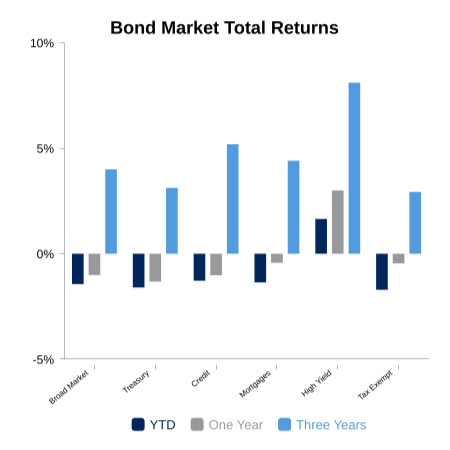
Core bonds were down 0.9% as yields continued to move higher. The 10-year Treasury breached the 5% level and recorded its highest yield since 2007. Strong growth, rising oil prices, and the prospect of interest rate hikes have all helped push yields higher in recent weeks.
The Fed Raises Rates
The Federal Open Market Committee (FOMC) followed recent hawkish rhetoric with an increase to the Federal Funds rate on Wednesday. The rate was raised 25 basis points to 4.0%, the first increase in more than three years. The messaging indicated more to come but did fall short of indicating a sustained tightening cycle was underway.
Fed Chair Warsh has tried to distance himself from forward guidance, but the market still focused on the Summary of Economic Projections. As has become customary, the FOMC forecasts inflation returning to 2.0% in three years. What stands out is that the year would be 2029 and mark eight consecutive years of elevated inflation readings.
The Fed’s preferred inflation reading is Core PCE, which first crossed 2% this cycle in March of 2021. In the 24 years prior to this, inflation readings above 2% only occurred in 20% of the months. However, there have now been 65 consecutive months with inflation readings over 2%. We have had more months with inflation over 2% in the last 5.5 years than what occurred in the 24.5 years prior.
 |
 |
Sources: BTC Capital Management, Bloomberg
The information provided has been obtained from sources deemed reliable, but BTC Capital Management and its affiliates cannot guarantee accuracy. Past performance is not a guarantee of future returns. Performance over periods exceeding 12 months has been annualized.
This content is provided for informational purposes only and is not intended as an offer or solicitation with respect to the purchase or sale of any security. Statements in this report are based on the views of BTC Capital Management and on information available at the time this report was prepared. Rates are subject to change based on market and/or other conditions without notice. This commentary contains no investment recommendations and should not be interpreted as investment, tax, legal, and/or financial planning advice. All investments involve risk, including the possible loss of principal. Investments are not FDIC insured and may lose value.