

Equities show resilience as global bond yields hit multi-decade highs
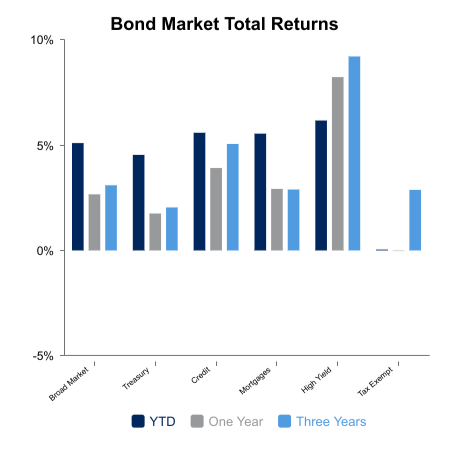
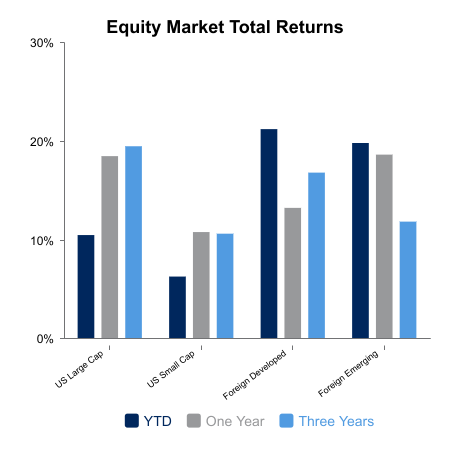
Equities were down slightly on the week. Rising global bond yields helped trigger the risk aversion. The S&P 500 finished the week down 0.5% while core bonds were up 0.1%. Monday began with U.K. 30-year yields rising to their highest level since 1998 and the Japan 30-year yields rising to their highest level in at least 25 years. This helped trigger an early sell-off in U.S. equities that was led by weakness in technology and consumer discretionary sectors. Prices would finish well off their lows and then move higher the following day to minimize the impact.
Rising global bond yields continue to be the dominant theme in markets, although it has mostly been ignored domestically as U.S. yields fare better on rate cut expectations.
- Japan, U.K., and Germany 30-year yields are higher than their 2023 peak.
- All three are at multi-decade highs.
- The U.S. long bond remains below its 2023 high of 5.07%.
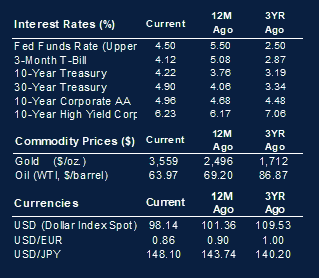
The U.S. long bond has gone from a low of 1.16% in 2020 to 4.88% today, which is by far the lowest increase versus the rest of the world. The U.K. has seen a 10x increase from 0.55% to 5.58%. Germany has gone from -0.20% to 3.34% while Japan’s increase has been from 0.27% to 3.26%. In 2020, Austria issued 100-year government bonds with a yield of 0.85%. The yield would ultimately drop to 0.37%, which resulted in the bond prices appreciating 40%. Since then, yields have gone to 3.2% and prices have dropped from $140 to $30 given the extreme duration.
Economic data continues to be closely watched given recent rhetoric that several Fed members are lining up for a cut to the federal funds rate at the September meeting.
- ISM manufacturing came in at 48.7, a slight increase from the previous month.
- ISM new orders fared much better with a jump from 47.1 to 51.4.
- ISM Services new orders jumped from 50.3 to 56.0.
- However, most of the employment data is trending in the other direction.
Yields dipped lower when job openings came in well below expectations. ISM employment remains weak at 43.8 and ISM Services is especially weak at 46.5. The ISM Services began releasing data in 1998 and through 2023, every reading below 48 was associated with recession. It never printed below 48 during any economic expansions. However, during the last 21 months, it has printed below 48 on eight occasions.
 |
 |
Sources: BTC Capital Management, Bloomberg
The information provided has been obtained from sources deemed reliable, but BTC Capital Management and its affiliates cannot guarantee accuracy. Past performance is not a guarantee of future returns. Performance over periods exceeding 12 months has been annualized.
This content is provided for informational purposes only and is not intended as an offer or solicitation with respect to the purchase or sale of any security. Statements in this report are based on the views of BTC Capital Management and on information available at the time this report was prepared. Rates are subject to change based on market and/or other conditions without notice. This commentary contains no investment recommendations and should not be interpreted as investment, tax, legal, and/or financial planning advice. All investments involve risk, including the possible loss of principal. Investments are not FDIC insured and may lose value.