

Treasury Yields Hit 24-year High
Key Takeaways
- Market breadth has weakened further.
- Economic data accelerates.
- Inflation remains elevated.
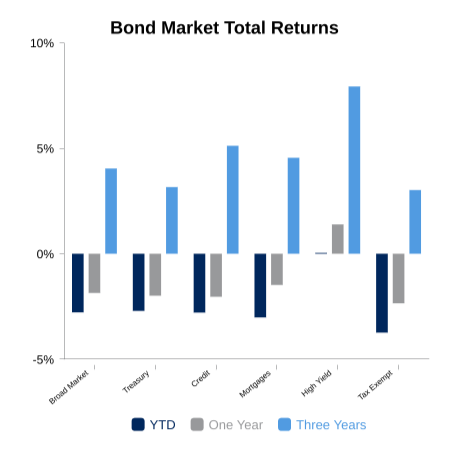
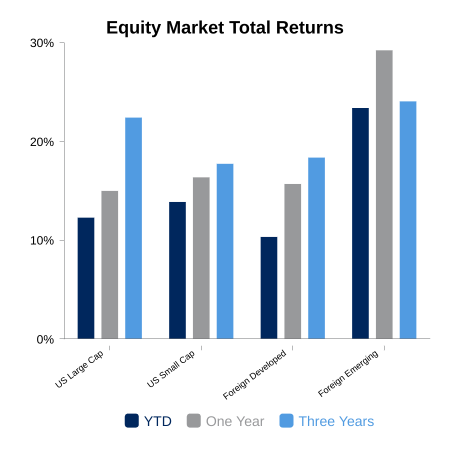
The S&P 500 was down 0.7% for the week but fared better than expected given the moves in the bond market. The NASDAQ was down 0.3% with certain industries in technology helping offset generally weak market conditions. Small caps underperformed with a weekly drop of 1.4%. Emerging markets slid 2.5%. Core bonds were down 0.9% amid rising Treasury yields.
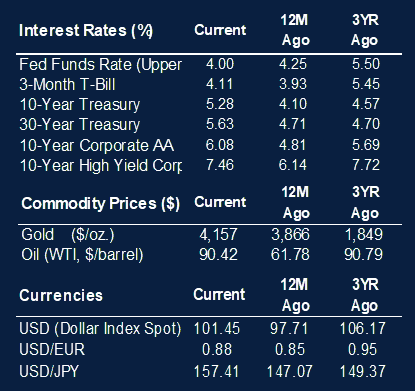
Rising Treasury yields have taken center stage with the 10-year Treasury rising to its highest level since 2002. The 10-year Treasury yield rose 82 basis points in the third quarter and finished at 5.28%. Yields rose into the Federal Open Market Committee (FOMC) meeting in mid-September where the hope was that an increase to the Federal Funds rate would alleviate persistent inflation concerns. Yields paused briefly before strong economic data fueled the recent move higher.
Economy Strengthens
The market has woken up to potential acceleration in economic data. S&P Global reported that Manufacturing PMI was 57.0 in September versus 53.9 the prior month. Services PMI was even better at 58.7 versus 56.5 in August. The 10-year yield rose 23 basis points on the day. Jobless claims printed under 200,000 for a second consecutive week.
The heavy economic calendar included the much-anticipated PCE inflation reading and a final look at second quarter GDP. Core PCE showed a 0.247 percent increase versus the prior month. Numbers are reported in tenths, so the 0.2 reading came in better than 0.3% consensus forecast. Equities popped 1% initially but faded. Core PCE now sits at +3.0% versus the prior year. This is the preferred inflation tool for policy makers.
GDP for the second quarter was revised up to 2.2% from 1.5% with personal consumption expenditures finishing at a strong 3.8%. Real final sales to private domestic purchasers rose 4.6%. This is used as a core demand figure as it includes consumer spending plus gross private fixed investment. It backs out inventory adjustments, net exports, and government spending. The previous two quarters were 1.8%, so the 4.6% reading is a big acceleration. In fact, this is the highest reading since the second quarter of 2021.
The FOMC focuses on Core PCE, which is at 3%, but the GDP deflator is another measure of inflation. While often ignored, it came in at 5.6%. This pushed Nominal GDP up to 8.5% using the same methodology that real GDP is reported. This is the highest reading in four years.
 |
 |
Sources: BTC Capital Management, Bloomberg
The information provided has been obtained from sources deemed reliable, but BTC Capital Management and its affiliates cannot guarantee accuracy. Past performance is not a guarantee of future returns. Performance over periods exceeding 12 months has been annualized.
This content is provided for informational purposes only and is not intended as an offer or solicitation with respect to the purchase or sale of any security. Statements in this report are based on the views of BTC Capital Management and on information available at the time this report was prepared. Rates are subject to change based on market and/or other conditions without notice. This commentary contains no investment recommendations and should not be interpreted as investment, tax, legal, and/or financial planning advice. All investments involve risk, including the possible loss of principal. Investments are not FDIC insured and may lose value.